Amano Shrimp (Caridina multidentata)
Amano Shrimp

Caridina multidentata
19 Litres (5 US G.)
3.8-5.1cm (1.5-2 ")
6.0 - 7.5
17.8-27.2°C (64 -81 °F)
6-10 °d
1:1 M:F
1-3 years
This animal is available captive bred
Contents
Origins
This particular species of shrimp is indigenous to East Asia. They are known to inhabit mainland Japan, Taiwan, the Ryuku Islands and the Korean peninsula. The first person to rear them on a commercial basis in captivity was the famous Japanese aquarium enthusiast Takashi Amano.
Alternative names
- Amano Shrimp, Algae-eating Shrimp, Yamato Shrimp, Japonica Shrimp, Algae Shrimp, Japanese Swamp Shrimp, Japanese Marsh Shrimp, Amamoto Shrimp, Yamato Numaebi
Synonyms
- Caridina japonica was its senior synonym until September 2006.[1]
Sexing
- The male has a row of distinct dots along its lower side. The female has this row as more of a broken line, and is also slightly bigger. See picture below.
Diet
They are renown for being algae eaters but when keeping them in larger groups, it is typically essential to provide them with extra food. Like other species of Dwarf Shrimp, the Amano Shrimp will eagerly accept food formulated for for bottom feeding fish and any aquatic invertebrates.
Contrary to information that has been surfacing in various fish-keeping blogs- shrimp will not eat fish waste from the bottom of your home tank.
With that being said, shrimp have never been known the be fussy eaters.
Their natural diet consists of algae, detritus, and microorganisms in their native habitats. In a home aquarium, a well-balanced diet for dwarf shrimp includes high-quality commercial shrimp pellets, algae wafers, and blanched vegetables like spinach, zucchini, or cucumber. Additionally, supplementing their diet with biofilm and microscopic organisms that naturally develop in a well-established tank supports their nutritional requirements. Regular observation of their feeding behavior helps ensure they receive adequate nourishment, promoting their vibrant colors and overall well-being in the aquarium environment.
Breeding
- To breed these shrimp, salt water conditions are required for their fry (or zoeas as is their correct name) as well as special feeding. Breeding of this species is considered fairly difficult as the zoeas need to be gradually introduced to salt water and then back to freshwater. See external link below.
- Several aquarists have claimed to breed this species in freshwater.[2] But as yet there is no definitive evidence to this. One shrimp taxonomist Werner Klotz has postulated that perhaps 1 in 100,000 zoeas may survive to adulthood in freshwater if the water chemistry is hard enough and this may be what aquarists have been seeing.[3]
Environment Specifics
- The Amano Shrimp prefers planted aquariums. Slightly soft (GH 6-10dh) water is preferred (if the GH is too low they can't make their carapace). They are extremely sensitive to ammonia and an excess of nitrate, and as such should only be added to a cycled tank. A small level of iodine in the water is recommended to help them moult. This can be supplied via normal fish food or via typical health food shop Kelp tablets.
- Like most shrimp any presence of copper in the water (bar background traces) will kill them.
- A tank of at least 10-19 Litres (2.6-5US G.) is considered the minimum and you can stock around one shrimp per 3-5 Litres (0.8-1.3US G.) in that.[5]
Behaviour
- These shrimp are diligent consumers of algae, and are one of the few species available which will consume black brush algae, a particularly troublesome form of red algae. It should be noted, however, that they generally prefer fish food to algae, and will only resort to the latter if the former is unavailable. Also, due to their small size, a large number of them may have to be employed to make a serious impact.
- If you see your shrimps at the surface a lot then this is probably due to lack of oxygen or high nitrate levels.
- Approximately once a month (depending on diet, age, and environmental factors), the shrimp will moult. During this time, the shrimp will seek out a place to hide while its new shell hardens, for safety reasons. Many inexperienced aquarists jump to conclusions, assuming their unseen shrimp to have been eaten; these fears are short lived however, as they usually reappear after a few days.
- Although mostly peaceful in temperament, Amano Shrimp can nevertheless be rather greedy feeders. While they refrain from attacking other aquarium inhabitants, they will not hesitate to steal food from smaller shrimp. In the absence of predators within the aquarium environment, Amano Shrimp will take on a rather active role, foraging and cleaning the aquarium of algae
Pictures
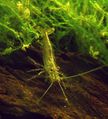
Amano shrimp in an Aquarium
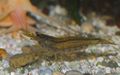
Young Amano shrimp in an Aquarium
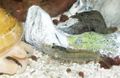
Amano shrimp In an Aquarium
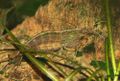
Mature female Amano shrimp
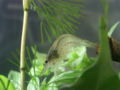
Mature shrimp
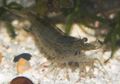
Closeup of the female Amano shrimp
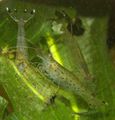
Closeup of two Male Amano shrimps. Note markings on tail
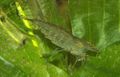
Closeup of a mature female Amano shrimp
Closeup of a female in berry
Closeup of male and female at play about 10 days prior to female in berry, note that she bucked two other males off consistently and let this one play.
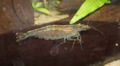
Amano Shrimp with Algae
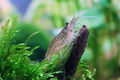
Caridina Multidentata on driftwood


Videos
| <googlevideo>-7703744637391125544</googlevideo> | <googlevideo>-3940132345711938585</googlevideo> |
| Amano in a community tank | Pregnant female Amano |
| Typical pair of adult shrimps in a tank |
| 6 day old Zoeas | 23 day old Zoeas |
References
- ↑ PFK Website News Item Matt Clarke, 21/9/2006
- ↑ PDF online forum 'Breeding Amano Shrimps' - August 2008. Aquarist Fishyfeet
- ↑ PFK online Aug 2008 - Can Amano shrimp breed in freshwater? by Matt Clarke
- ↑ PFK magazine, Issue 1/January 2008, page 60 by Chris Lukhaup and Werner Klotz
- ↑ PFK magazine, Issue7/July 2008, Page 22 by George Farmer
External links
- PodvodoyAquatics.com - USA Seller
- [1]
- Wikipedia on Caridina japonica
- [2]
- Caridina.japonica.online
- caridinajaponica.de
- The Krib Advice
- Pet Shrimp
- Amano shrimp gets new name
- Amano Shrimp : Spineless Heroes
Mailing lists and forums for further discussion on these shrimps can be found:
- PodvodoyAquatics.com - USA Seller
- Yahoo Group Freshwater Shrimp
- Shrimp Now
Commercial Sellers
- PodvodoyAquatics.com - USA Seller
- The Shrimp Spot - Worldwide Seller of Shrimps
- Planet Inverts.com Shrimp Store - USA Seller of Shrimps
- Franks Aquarium - USA Seller of Shrimps
- PetShrimp - USA Seller of Shrimps
- The Shrimp Factory
- TheShrimpFarm.com - USA Seller of Shrimps
- Shrimpfanatics - Worldwide freshwater shrimp store
- Aqua Essentials - A UK store


