Chinese Algae Eater (CAE) (Gyrinocheilus aymonieri)
From The Aquarium Wiki
(Redirected from CAE)
Chinese Algae Eater (CAE)

CAE
Gyrinocheilus aymonieri
132 Litres (35 US G.)
12.7-27.9cm (5-11 ")
Freshwater
6.5 - 8.0
23.9-27.8°C (75 -82 °F)
5-18 °d
1:1 M:F
2-5 years
Family
Gyrinocheilidae
Contents
Additional names
- Chinese Algae Eater, CAE, Indian Algae Eater, Sucking Loach, Golden Algae Eater, Lemon Algae Eater
Additional scientific names
- Gyrinocheilus kasnakoi, Gyrinocheilops kasnakoi, Psilorhynchus aymonieri
Origin[edit]
- Found in larger freshwater rivers in Asia, primarily the Mekong, Chao Phraya and Meklong basins as well as the northern Malay Peninsula.[1]
Sexing[edit]
- The males barbels tend to be more numerous and longer than the females, mature females will be plumper than males. Not known to readily breed in captivity.
Tank compatibility[edit]
- Best in a species tank as this fish matures and becomes aggressive towards tank mates and con-specifics. Do not keep with smaller fish such as Neon Tetras or slow moving high-backed fish such as Angelfish and Discus. They must never be kept with Goldfish. Has been seen to cope well in semi-aggressive set-ups, even with African Mbuna Cichlids!
Diet[edit]
- When young will eat algae. As it ages it quickly loses the taste for plant material and likes to eat the slime and eyeballs of larger fish, and may even eat smaller fish entirely. Feed sinking algae wafers, blanched vegetables like zucchini, and will also take sinking catfish wafers and meaty foods as it matures.
Feeding regime[edit]
- Feed once or twice a day, more so if the fish is in with other relatively unsuitable fish to avoid it grazing on slime coats.
Environment specifics[edit]
- Prefers a mature well-filtered planted aquarium, long rather than tall, with lots of hiding places. Does well in stronger currents. Be careful with plants planted in the substrate as they may become uprooted. Also provide driftwood and rocks to hide and suck on. This is a tropical fish that appears to be especially sensitive to sudden temperature drops.
Behaviour[edit]
- Hides most of the time during the day and primarily bottom-dwelling. Will become territorial and aggressive as it ages. By a year old it may attack other similar shaped fish and has been known to eat the slime coating and eyes of other larger fish. This fish can grow up to 25.4-27.9cm (10-11") long, and its eventual size needs to be taken into account when choosing a tank.
Identification[edit]
- This fish is golden in colour with a dark band running along its body and a series of dark spots alongside and a light coloured underside. It has a large sucker mouth for holding onto boulders and other flat surfaces.
- A bright yellow morph with a very faint band is also available at many stores, sold under the name "Golden Sucking Loach" or similar.
- The CAE has adapted gills for it to breathe easily when latched on to rocks in strong currents, it has a large opening at the top of the gills which is used for both breathing and ejecting unwanted food.
Special Note[edit]
- This fish is sold cheaply across the world as a small 'algae eater'. This it does to some degree when young. But it grows fast and after it reaches 10.2-12.7cm (4-5") in length it may start attacking large slow fish like Angel fish or Goldfish for their slime coat. So the CAE is not a good community fish. Most shops don't tell the customer about this nasty side of it.
Pictures[edit]
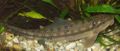
12.7cm (5") long CAE
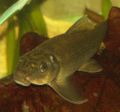
Front view
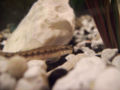
CAE
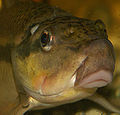
Adult CAE Close-Up
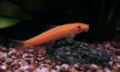
Golden CAE
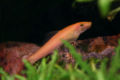
Golden CAE


References[edit]

External links[edit]
- Fishbase (Mirrors:
 )
)


